Hi all!
Firstly, I though about post in the topic Cantai: singing your Dorico files. Some results , but may can be better and more collaborative a new topic (well, is my fist topic, lol), since have a certain “direction” (like about purchase or not Cantai for also use in Portuguese, and other questions). And, I can post here other eventual questions, trials and “discoveries” (overall, phonetical, maybe).
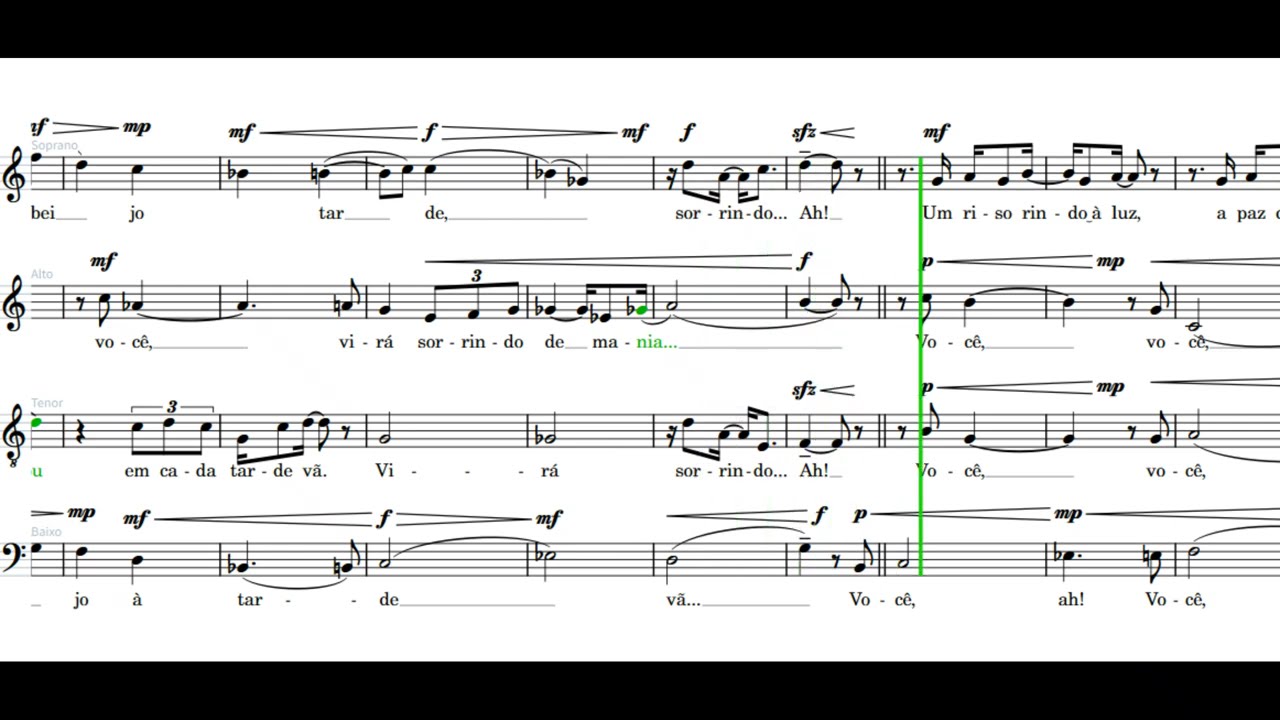
I recently (yesterday  ) purchased Cantai, aware of the three disponible languages (that I eventually use). Since I’m Brazilian and compose/arrange overall in Portuguese, I considered Latin and Spanish as referencial possibilities for my vocal works and studies. So, as example (again, I guess that can be collaborative for who use Portuguese - Brazilian and European), I’m attaching as example an excerpt of my arrangement (study) for SATB by the song Você ( Roberto Menescal / Ronaldo Bôscoli), for phonetical references:
Excerpts:
In Spanish:
In Latin:
Note: I just changed the playback template and choose the individual voices. But, some phonetical workarounds (need more tests/attempts) can be possible. This is the first “test”. May something in audio rendering happened…
To consider (and phonetically expected):
- The Portuguese que/qui sounds “kue/kui” in Latin (You can use “ke/ki” workaround), but works in Spanish;
- The Portuguese (E)xi (as from “exilado”) - and, probably other similar words - sounds “ekzi” in Latin and Spanish (You can use “zi” workaround). Below, Exilado and Ezilado[1]:
- The Portuguese “ce” (from “você” and “entardeceu”) sound “tche/che”, but works in Spanish;
- The Spanish “j” sounds “r”;
- The Portuguese “jo” (from "beijo") sounds “go” in Latin and “ho” in Spanish;
- The Portuguese “nhã” (from *“manhã”) sounds “nã” twice. The “double r” (from "sorrindo") also sound “one r” twice.
Finally, may can sounds a little as a non-Portuguese first language speaker (it was expected), but, is USEFUL and FUNCTIONAL for my use purposes (I added in [EDIT] other comparison, whit a real choir) .
(…) Maybe, in the future, an update in Portuguese… who knows! 
[EDIT] More references from except (my composition):
Original, with students choir (and accompanist piano):
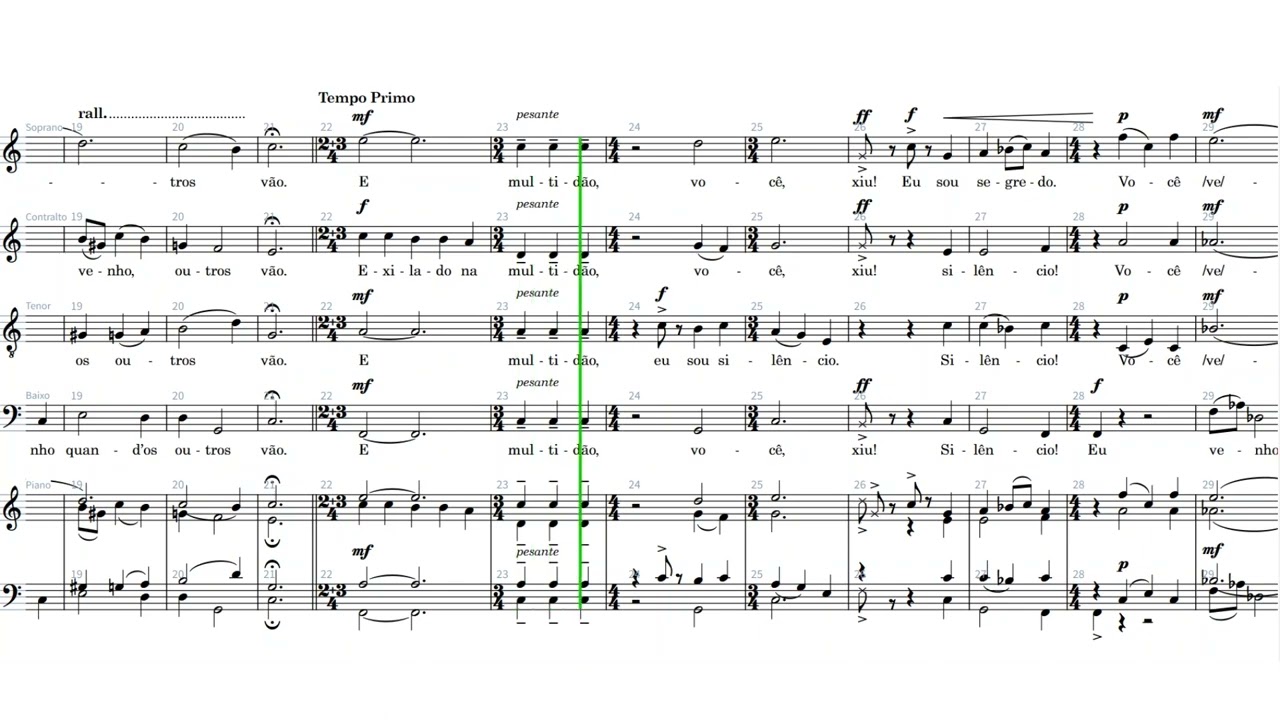
Cantai choir using Spanish:
Cantai choir using Latin:
I hope my post can help in some way!
From the composition added in [EDIT] ↩︎