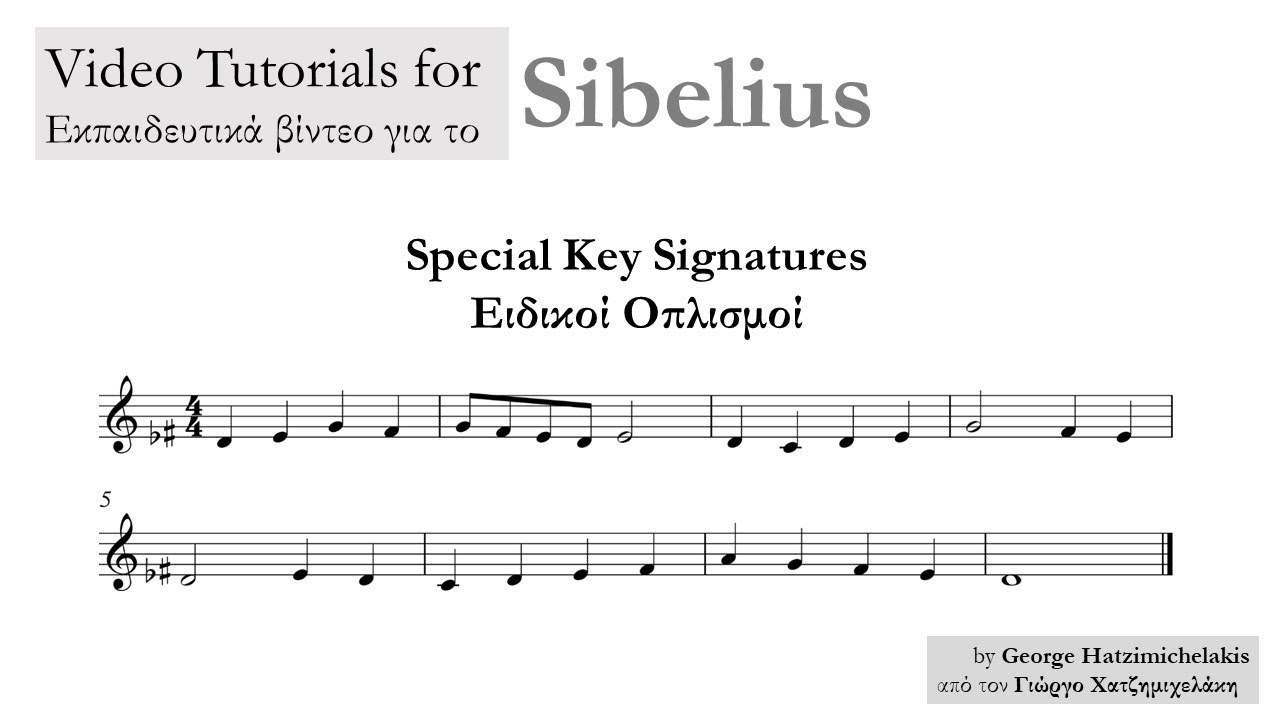
Click on the pencil icon in the ‘Tonality System’ box, and then on the plus icon in the ‘Custom Key Signatures’ part of the dialogue box. You can then add any accidental you want and use the arrow keys to move it to whatever note you want, and also change the left-to-right order.Once you’ve ok’d everything it will appear in the ‘Custom Key Signatures’ section of the right-hand panel.
What I haven’t been able to do is place the accidentals in different octaves as they are in the video that you linked, or in some Bartok pieces. Is there a way to do that? The operation manual doesn’t seem to have information about that.
Thanks Vilnai! No, I can’t place them as in the video either, but playback is correct, without having to using “phantom” key signatures and hide notes as you would have to in Sibelius, so this is quite helpful.
Try the attached simple file, Carlos, which shows this kind of custom key signature in action, and which produces the expected E flat during playback. melodic-minor.zip (205 KB)
I just created a KS for E♭Wholetone (where E and D are flat.
This is what I did:
set up the score as usual
in the Write mode’s Toolbox, selected Tonality System (‘##’ first in column on right)
leaving 12-EDO selected, clicked on ‘+’ to add a new Tuning System
in the Edit Tonality System which results, clicked on ‘+’ in the third to the right, ‘Custom Key Signatures’
in the Edit Custom Key Signature which results, named my new KS accordingly,
in that Edit Custom Key Signature, selected one flat as my Accidental (bottom of dialogue)
in that Edit Custom Key Signature, placed one flat on E and one on D (changing the order if necessary) having chosen the clef
clicked ‘OK’ in that Edit Custom Key Signature to exit
dragged the 2-flat (E♭,D♭) ‘Used in This Flow’ custom key signature to my score
I believe that’s the correct way to do it, but will be happy to be corrected: everything sounds, and looks as it should. Dorico even applied the custom KS to all the the players, correctly - including a C Clef for alto trombone.
You can specify which staff position the accidental is shown on, since typically there are two possible staff positions that a given accidental could appear on, and you can control that for each of the three main clef types (G, F, C), but I guess what you’re asking is whether you can specify that an accidental should apply only in a specific octave, in which case the answer is no, you can’t do that at the moment, and it’s not something I anticipate us adding in the near future, but I’d be happy to hear more about your requirements.
No, I was just asking about the staff position with the accidental applying to all octaves. And looking at the dialogue again I see there’s an ‘octave’ option that I seem to have completely blocked out yesterday, and now I feel foolish…
bobsabin, please do Help > Create Diagnostic Report and attach the resulting zip file to a reply here or send it to me via email at d dot spreadbury at steinberg dot de so that I can investigate. If you have a project that consistently causes Dorico to crash, please also provide that here (zip it up before you attach it) or send it to me via email along with the steps required to reproduce the crash.
I’m sorry that you find Dorico to be complicated and unstable, but merely complaining about it without providing us with any of the details we require to be able to help you in the short term or improve the software in the longer term is counter-productive. And in general these features – custom tonality systems and key signatures – are working well for a wide variety of users, so this gives me hope that we will be able to quickly resolve the problem you are experiencing and get you back up and running again.