
When entering the score in Dorico as shown in the picture, considering that I will later work on the parts, should I separate it from the beginning as Instrument 1 and Instrument 2 and then use the condensing function to display it as in the picture? Or should I enter it as chords for one instrument and then separate it later?
The Dorico proper way is first write separate (2x 2 instruments in your example = 4 staves), then use condensing.
Galley view will never condense, so in Galley View you’ll always see all instruments separated.
(When I say then use condensing: you can actually use condensing from the beginning in page view if you want, but you’ll have to enter the music in Galley View.)
Thanks.
1.In the place where it shows ‘a2’, do I need to enter the same thing twice in two lines? 2.Once the condensing function is set, does it stay active until the next setting?
Yes, that’s it.
I’m not sure to understand. You can globally activate/decativate condensing at any time, or you can insert condensing changes at any place: for example if there is a system where for some reason you would like not to condense, and go back to condensing on the next system/page, it’s possible. It’s called condensing change.
When the Condensing function is turned on, is it applied automatically? Or do I need to set it separately for each instrument in the Condensing Change dialog?
It will apply automatically to the instruments of the same type (flute with flute, oboe with oboe…)
And if you need to override that, you can use condensing changes, or custom condensing groups in Layout Options.
But basically, if there is nothing unusual in your score, just enable condensing and let Dorico handle it!
When Condense Change is visible in the View menu, does that mean it has been manually adjusted? If it was adjusted automatically, is it not displayed?
If you see a Condensing Change signpost, yes, it means that there has been a condensing change (which is a manual action). You can select it and press Enter to see the details. You can also delete it.
Useful tutorials:
A short video (from an older version of Dorico but it didn’t change that much, I think)
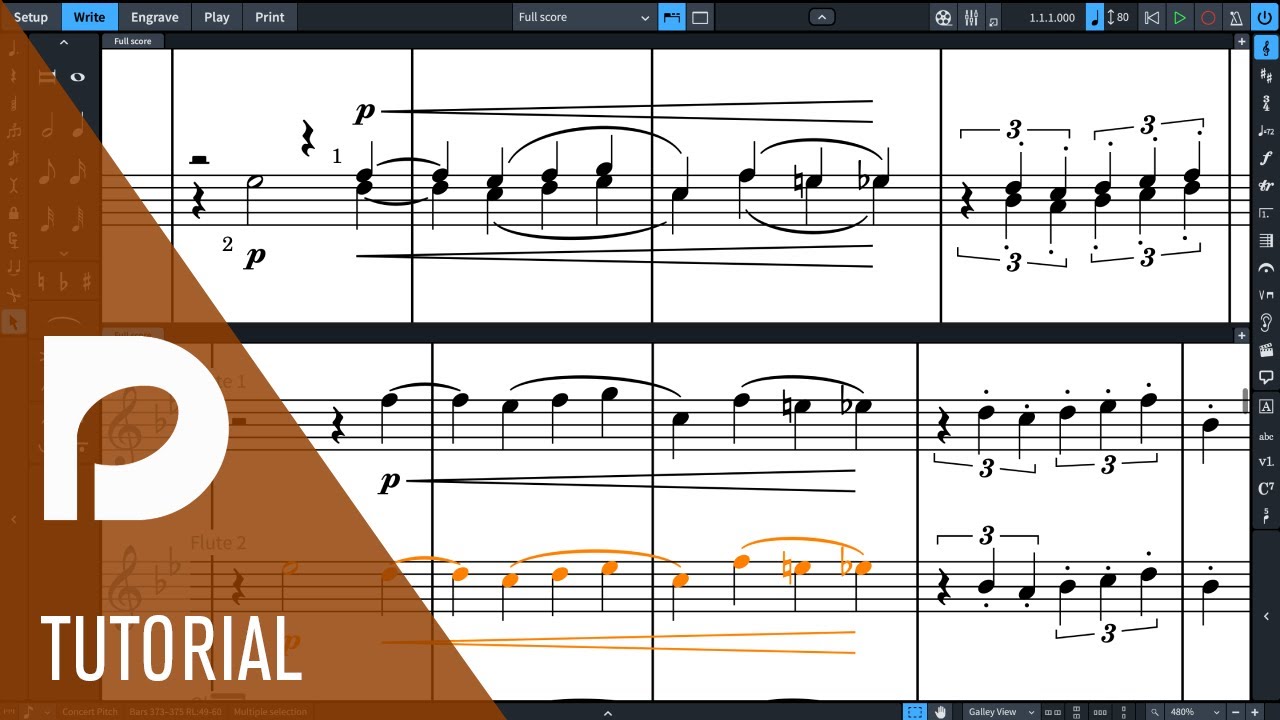
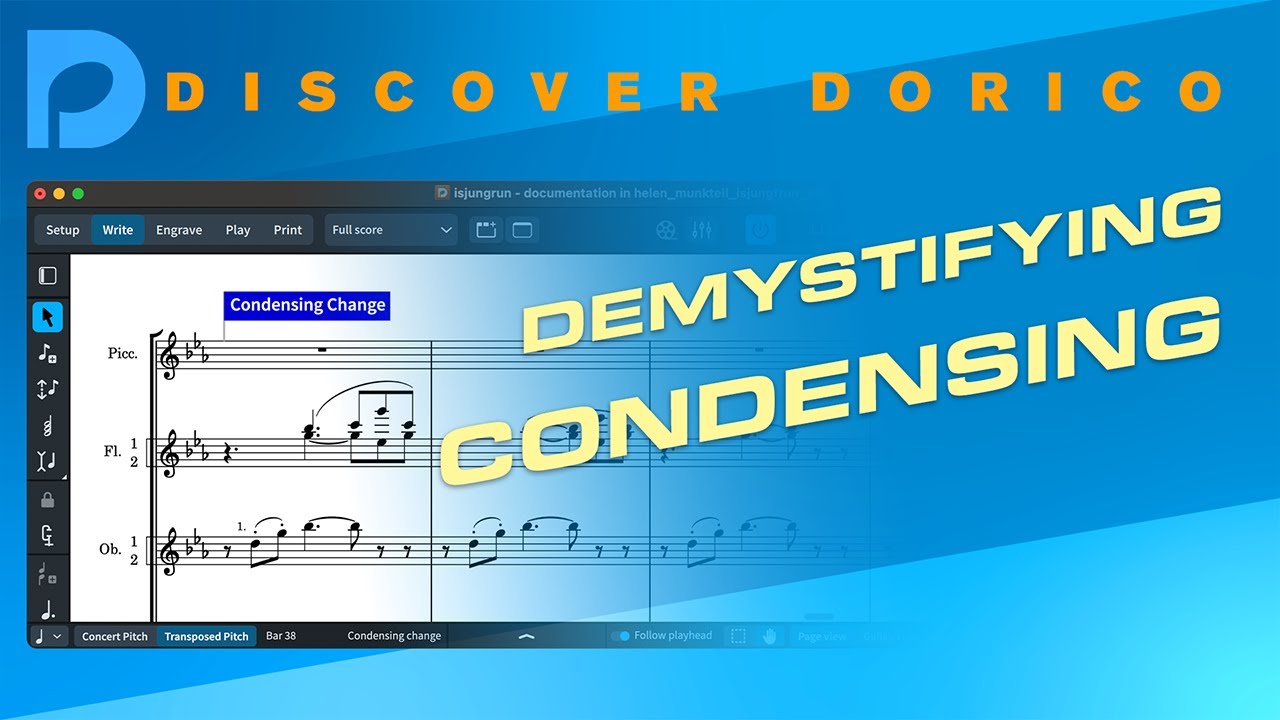
And a very thorough one:
Thank you for your kind answer.
Is it usually done automatically, or is it applied manually only to certain parts?
Mostly automatically for common orchetral music. And of course manual changes (condensing changes) for fine tuning.
Feel free to create a scratch project — for example with two flutes and two bassoons — and experiment there to see how it works.
The question is what instruments are affected. If your example shows two vocal parts divided that generally use like rhythms, then there is no need to use separate instruments unless one needs separate sounds sources for each note, since singers generally sing from vocal score rather than separate parts.
If these are some other instruments, like clarinets and bassoons, which expect to receive individual parts, the that is a different matter.