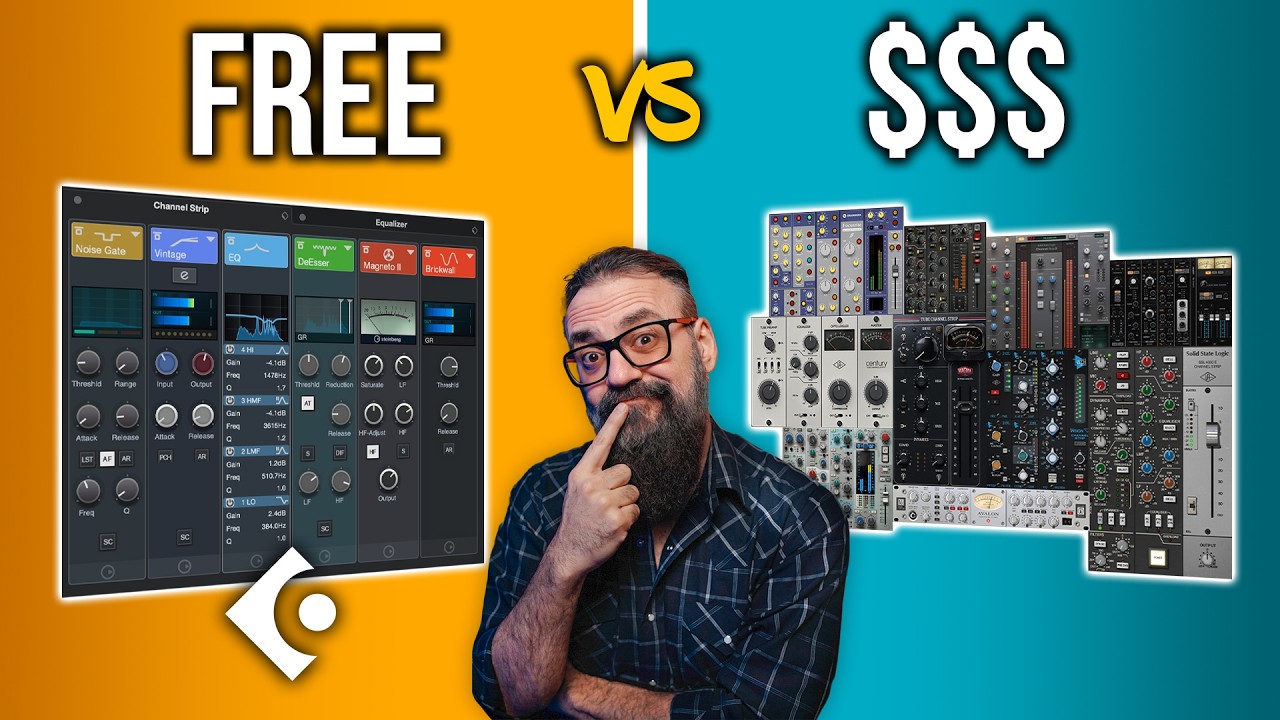
Oh yes anyone is welcome to answer and thank you for the explanation.
I have a couple (plugin emulations) which you can emulate the different channels. I never really knew why people still used them over the new more visual EQ though. I’m guilty of not looking further. Now I know so will take a better look thank you.
I’m liking 80s pop stuff a lot and Italia Disco lately. So I guess they used these channels on the big mixing desks to do all of that didn’t they. I will give the plugins a go and start using my ear with them. Thanks.
Edit: I seem to have an SSL one and Neve emulations. The Neve one (bx_console N) looks like out of retro a Sci-Fi movie. I will need to learn that.
LOL, some of them look indeed like they are coming right out of an old SciFi movie
If you are into that sort of music I would suggest to look at famous producers and mixing engineers of that aera. It’s fun to read some of their background stories and pick up on a bit of geeky gossip, too. SSL consoles were huge in the 80s and had a massive influence on the sound of the 80s.
If you want to get a feel for a specific sound it’s quite rewarding to compare different productions by starting with a single producer/mixing engineer. It’s not just about the sound in general but also about the way they kept things exciting in a mix by all sorts of techniques. You’ll find that some of the most iconic producers/mixing engineers have some sort of signature sound to them. It’s a super way to learn from them just by listening and comparing how they mix & arrange stuff and also what kind of gear they used. I am always humbled and inspired by their ingenuity. BTW, the same applies to other genres and eras as well. Every time has its own gems which are worth discovering IMO
I noticed everything is in reverse on that neve plugin
I love the console strip in Cubase. I will learn the SSL plugin too. I’ve had a go tonight and like the different approach.
Actually this week I watched an Alphaville documentry after finding the album in the house on record. I loved the arrangements and sounds. The documentry explained how they made some stuff. They seem to be a bit different than the others from that time.
I will look into it all more. I think Dua Lipa’s producers found the same records too .
Yes taking in all sorts of genres too. I’m on it lol.
I’ve found more channel plugins installed. Noise Ash ones Neve emulations again). Just to be clear though. Dad’s Cubase, my PC lol. I’ve not gone and bought loads of plugins I have no idea about
But I can hear the tone difference with the Noise Ash ones more. Quite nice.
In the end it is all about what works for you. In order to learn about EQ, compressor, saturation/distortion the channel strip in Cubase is more than enough. Once you understand which effect does what you can go for sound optimization, ie. try out different brands.
At least that is what I did.
Yeah there’s tons to read about production back in the day. From how instruments were set up to mic choices to the console and outboard gear.
One thing you can do is to pick an album you really like the sound of and just dive deep into how it was made. If it’s a pretty famous album there’s a good chance there’s info out there somewhere about what they used, including what console for recording and for mixing.
I’ll add to this that the emulation plugins don’t all sound the same in my experience. “Back in the day” when emulation was pretty new (say the first generation of Universal Audio’s emulations) an LA2A emulation sounded more like the real thing than a standard, clean compressor plugin, but it was pretty far from where it ended up after a revision or three. So just because a plugin says “SSL” or “Neve” doesn’t necessarily mean it sounds like the real thing. Of course, that doesn’t matter as long as you like the sound.
Yeah, this is what, the 2nd or 3rd retro 80’s wave? Give another 7-9 years and new people will discover it again! Maybe we’ll get 60’s or 70’s between now and then?
Take your time learning these things and most importantly - enjoy it! It’s never going to stop, you’ll always learn new things and that’s a blessing!
Cool that your dad installed Cubase and plugins on your PC - good man
I like the synth sounds and enjoy trying to work them out. Last summer I taught myself FM synthesis but I would say FM lab made me understand it 100 times easier than if I was to use just a DX7 lol.
As for production. I think a good understanding of how things work is the best way to get on but I couldn’t do it all. Some people are naturals at it. I would like to know enough to make a guitar or synth sound nice and fit well etc.
I don’t mind if the emulations are not 100 really. I like using a DAW. I don’t know how they used to work with tape back in the day though. Crazy times.
It’s all first wave to me I think with rock bands the 70s are a big aren’t they?
I will and am enjoying it. And I learned something new today with these strips. I had a play and doing it by ear with basic understanding of the settings and I could hear something different already. I shall carry on with it.
Yes it started off with me showing interest in it. Then I stole it
After playing with the channel strips I have. I prefer Cubase’s for now. It has everything I need and more.
Infact I tend to use Cubase stock plugins the most. I know all DAWs sound the same but I noticed a difference with the same EQ settings in Reaper (JS EQ) compared to Cubase. I don’t know the word for it but Cubase made stuff seems more polished? Or the EQ is more responsive?
This is true when not using plugins.
The plugins can and usually will sound different.
Even the channel EQ in itself sounds different depending on the type you chose for each band.
So, all okay.
I am finding this out now. Same settings on different DAWs had different results.
I like the pre filters on the channel strip in Cubase. Cutting some of the highs is very responsive compared to some other things I’ve used. Makes stuff sound more analogue at times. Hi-hats etc.
Mixdown Online (Chris Selim) is one of the best Youtube channels when it comes to Cubase tutorials IMO. Steinberg should name a channelstrip after him
About channelstrip emulations and not having visual feedback: Blindfold EQ is a helpful EQ plugin which forces you to rely on your ears only - at first. Later on, you can reveal the changes you made. It’s a little helper to train your ears and also a good reminder that you should always listen to your ears and not primarily focus on visual feedback.
If you want to check out sonic qualities of classic channelstrip emulations I would start with SSL, Neve and API (try before you buy). All three come with very distinct qualities so it’s a good starting point. Also, try to use mulitple instances on different tracks (drums, vocals, bass, synth etc) and see how they add up in the mix. Try to tune your ears into things like definition, weight, brilliance, warmth, handling of the low end etc. It’s cool to discover how the mix shifts its colour and vibe
Oh yes I think I’ve watched most of his vids and Dom’s. Yes that would be a good idea to name it the Selim strip
Thanks Reco. This is why I asked about them really and why do people still use them. I take it once you have used a channel strip to sculpt the desired sound you wish. If you need more precision you use another EQ like Frequency 2 to remove the Mud and harshness?
Thank you. I had to do this for a part. There was muddiness around the 400ish mark and a bit harsh around 3k area.
So when it was all hardware did people use the desk channel strips to do most of the donkey work and use dedicated EQ racks for details on certain tracks?