Yeah, and honestly, I dunno if the (most realistic) best case scenario would even involve a native Linux version of Dorico to begin with. So very often, Linux ports are an afterthought, and the task of maintaining them is often neglected or entirely abandoned, in which case, it usually would’ve been better for all parties involved to just get the Windows version running well through compatibility tools.
I dunno if anyone here happens to be into video games, but Valve’s newly announced Steam Deck (a new handheld PC/gaming console that looks kind of like a Nintendo Switch but for people with normal sized hands) runs Linux, and they are not at all chasing native Linux ports. Instead they’re just putting loads of effort into Proton (their fork of Wine), which means software developers only need to maintain their Windows versions. It’s pretty much win-win-win. Valve wins by getting more software because they can run Windows games, developers win because they don’t need to develop an extra port to maintain (potentially poorly), and users win because very often Windows software runs just as well or sometimes even better on Linux.
Likewise, I think the best thing (or the thing I would hope for) would be for the Dorico team to help us get Dorico running as well as it can through Wine (or at least with just a little less friction). Like I said just above, I think that could involve not too much effort… depending (I know these are so very often famously naive words…).
For instance, as a start, the installer is actually just a program that unpacks a bunch of smaller installers and runs each of them, but for some reason this doesn’t play nice with Wine. It would be great to be able to directly download this as a zip file with all of the individual installers instead of as an exe.
I suppose what I would also really appreciate is potentially for the devs to take a look at my process and potentially point out things like “oh, yeah, Halion isn’t installing because you’re using the wrong installer file and/or you need to manually move the patches to such and such a directory because the installer is failing to do so” or “you should also install this xyz library with the others; it’ll improve performance a whole bunch,” etc.
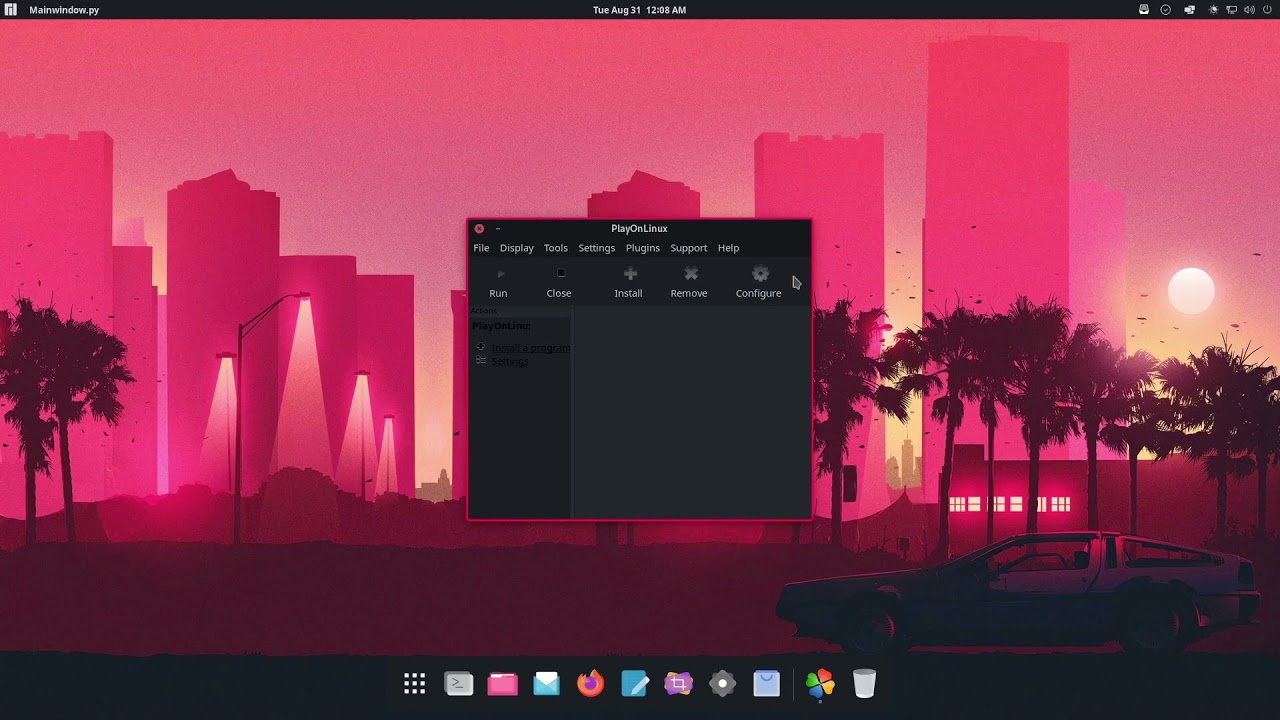
At some point, I’m sure someone, either a user or dev, could also put together a shell script or a PlayOnLinux script that would make installation happen with just a few clicks. That’s probably one of the bigger headaches here, just having to sit there and install each and every component (and make sure you’ve not messed up any individual thing). After that, the program runs surprisingly well, maybe not ca. $600 well, but definitely well enough to do some real work in. This last part I imagine I’ll get to eventually if no one else does, but it’s just slightly above my paygrade at the moment (as was the rest of this a year or two ago).
All that to say that, yes, I agree with Ben; I wonder how many people actually want to make the switch (I actually think it could be a decent amount, potentially moreso because of prospective users, but it just as easily might not be). And even if it did turn out to be a whole lot of people, would they be best served by a native Linux client given that the team is already maintaining several different versions on each of three different operating systems? I think probably not.
 “please can we have a Linux version?” “I think Mac’s better’, “no windows” ‘wait what?”