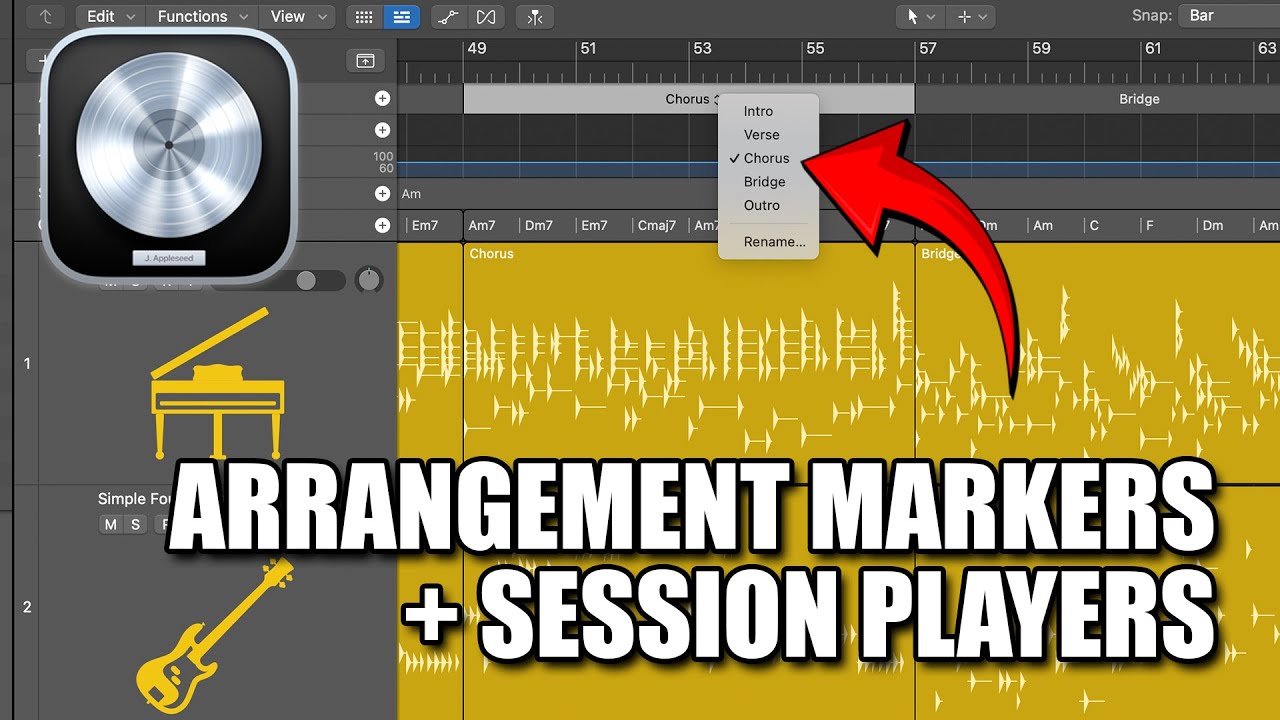
I just ordered an ipad so I can use Logic Pro to easily add drums, bass, and keys to my songs via the session players. (I am a guitarist)
Do Yamaha/Steinberg have any plans to one-up Logic by implementing a backing track software that utilizes Yamaha’s pre-existing library of styles from their arranger keyboards?
This seems like such an obvious way to “beat the competition” for people like me in the market who need to make backing tracks quickly for demos and more.
You could have it read the chord track, but you could add a timing track that allows users to input hits, stops, silences, pushes, fills, etc.…
Why does this not exist? Why should I have to go to Logic Pro for this when Yamaha/Steinberg could do it even better?!
They used to have that kind of software. It was called Sequel. The following is an opinion piece (not by me - I just found it on the first page if Google results), but strikes me as making some valid observations.
I’m not sure, but it may be a (free?) download from the legacy section now.
Yes, it shows up in the Media Rack in the Project Window’s Right Zone under Loops and Samples. I have never purchased Sequel so I’d say it comes as additional content with Cubase. I can’t remember downloading it, though…
I was sincerely hoping to hear a serious answer from someone on the Steinberg team. I truly believe Steinberg/Yamaha have an easy opportunity to beat the competition here. You may not have done it first, but you can do it best.
I believe there is a large market for this sort of thing, and until now the capabilities of arrangers like the Yamaha PSR sx920 have been reserved for keyboard players only who purchase that specific piece of hardware. Why not expand that into the software market, and create something non-piano players can benefit from by simply typing out the chords, selecting a style, and adding some dynamics, stops, and fills info?
For all the songwriters, producers, drummers, bassists, guitarists, singers, and music enthusiasts who do not play keys please do this.
I would rather not watch videos of people cursing.
I have tried EZ Keys, EZ Bass, and EZ Drummer and those are decent products from the competitors that I would imagine are bringing in a lot of revenue for their owners, but they are nowhere near as effective for quickly composing entire backing tracks as a Yamaha PSR sx920.
I have also tried Band in a Box, and it is ok for some things, but the sound quality diminishes greatly on the acoustic instruments with the algorithms they use to make the instrument tracks fit the key and tempo needed for your specific song.
Obviously there are plenty of musician snobs who would not want Steinberg to produce such a fun and easy to use track creation software. I am not interested in hearing from those people. I make my living as a musician/singer and have played on recording sessions with some really great musicians, and I do not feel threatened at all by these music creation software products. I realize the limitations these products have and the amazing creativity of great musicians that simply can’t be replicated nor replaced by software. But I do still find these products useful for certain situations.
Again, I am hoping someone on the Steinberg/Yamaha team will respond to the questions in my previous posts.
I’m not exactly sure what you want then if the EZ keys/bass/drums doesn’t do it for you or band in a Box either.
Out of interest, what is the purpose of using these tools? is it to get ideas down as ‘demo’s’ then TBH it doesn’t really matter if things dont sound ‘exactly’ like a real player, surely it’s to get the ‘idea’ down.
If you’re making a finished product then surely at that point you give the ‘parts’ -’ideas’ to the musicians you chose and they’ll play them ….
Just trying to get to what you’re after here above what Toontrack and Band in a box can’t offer.
The Toontrack stuff is definitely capable of what I am talking about, but after using it to produce a track I find it way more time consuming than something like a Yamaha PSR sx920 arranger keyboard for generating a complete idea.
Band in a box is definitely closer to what I’m talking about, but lacks too much in sound quality when changing tempo/key, and really does not do very well with hits, pushes, or anything that breaks the cookie cutter mold. The produced real-tracks in BIAB are not editable like midi.
What I am talking about would generate the midi tracks for each instrument (not just keys, bass, and drums.) and each one could be edited on an individual basis for riffs specific to that particular song. It would be tightly integrated into Cubase so there would be no need to transfer chords or arrangement info to another software to generate the parts and midi info, and it would automatically generate the tracks and virtual instruments necessary for the chosen style. So you would be ready to mix, edit, rearrange, change the key, change the tempo, change even the smallest details if you so desired.
So a guy who needs to create a backing track for a song that he is only going to sing one time at a funeral that he is not getting paid for in two days can create the needed accompaniment quickly and without much cost. Yes, it doesn’t sound like a bunch of pro-level musicians jamming in Nashville, but it gets the job done.
It has the same functionality of an arranger keyboard, but takes it even further by making all the parts readily editable, and bringing that functionality to people who do not play keys.
Here is a video of someone demonstrating one use case in Logic Pro for this kind of software:
The Yamaha auto accompaniment stuff is pretty high end and last time I checked also relatively pricey.
Since I’m just a regular user without any inside info, I can only speculate why Steinberg has not ever gone after more fully featured auto accompaniment. Maybe it’s a (Yamaha Steinberg) company internal policy to stay out of each other’s backyard (non-compete)? And auto-accompaniment is definitely in Yamaha’s wheelhouse. Arguably industry leading.
But again - this is just one possible wild speculation and since Steinberg never spills internal info, anyone’s guess/speculation will remain just that.
So while there are baby steps like chord pads and the new drum pattern thing in C14, none of those get anywhere near full auto-accompaniment.
For some genres recent versions of Band-in-a-Box can sound pretty good, since they use real recordings of studio players.
The GUI is still very old school, and definitely takes some getting used to. But once you know the workflow, if you want a quick backing blues band, it can sound quite decent.