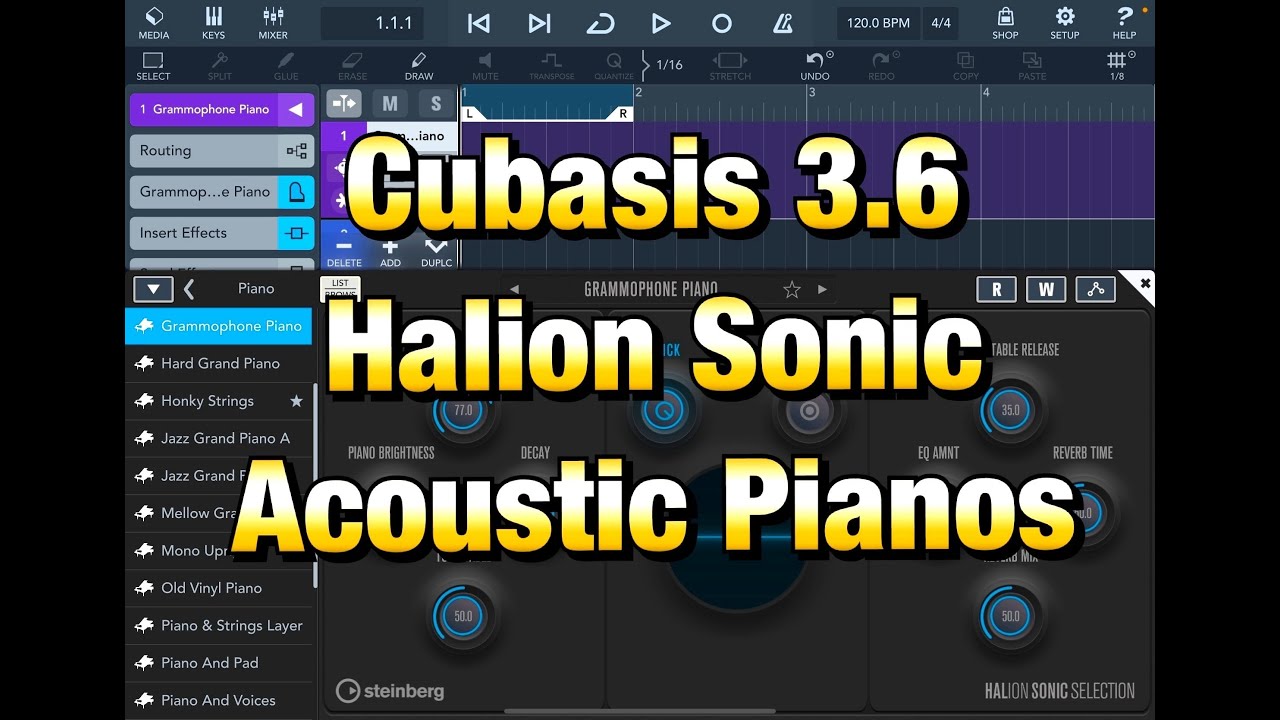
If you use Steinberg Hosts on your PC or Mac, it’s nice to have, as most if not all Steinberg hosts (Nuendo, Cubase, Dorico, Live, etc) come with these sounds and the Sonic 7 player. Having some common sounds on all of your devices can come in handy, as you then know what you built on one device should translate well on the others.
Sonic can do both sampled and synth based sounds. I’m pretty sure most of the “Sonic Selection” library uses romper/sampler based stuff. They’ve cherrypicked waveforms from different Yamaha products over the ages, and Steinberg probably made a few brand new ones as well.
If you like the classic Yamaha S90ES stage piano then you’ll probably appreciate it. It has quite a few patches that are probably based on the samples from that keyboard, plus some leaner pianos that are nice in thick mixes. In the Windows/Mac versions these enhanced pianos are NOT the ones in the lower default GM bank, so you might have to seek them out and load them manually if you started out with an imported GM/XG/GS MIDI file.
I think you can check out the Windows/Mac versions for free by grabbing Dorico SE. That should give you a Sonic Player (can also be used standalone, or in other hosts), and access to the Sonic Selections library (or at least part of it). From what I can tell in watching the video above, the Cubasis version has similar if not identical patches (named the same anyway).
The S90 digital piano was one of the best playing/sounding stage pianos of all time, and a lot of performers still lug them around and use them to this day. It still packs a punch in 2025 mixes, especially given the smaller memory footprint as compared to more modern sample based acoustic pianos. So, it’s playable, quite dynamic given the size, easy to shape up for different styles of music and mixing, and it shouldn’t seriously eat into your polyphony and add latency like ‘modern’ piano plugins.
I haven’t tried it on Android or iOS, but if it is the same library as Sonic Selection for Windows and Mac, it’s a great/diverse library to be under 2gig in size. The GM sounds will be the smaller and more efficient stuff sounding kind of like the old Yamaha MU tone modules, but it does have a number of higher quality bread and butter sounds on top of the GM bank to explore.
Keep in mind that in 2025, a high end dedicated sample based piano plugin starts at around 4gig, and the best of the best can easily be 4 times that size, as they’ll give you like 12 to 16 velocity layers, plus 4 to 16 round robin variations of each hammer/velocity layer; maybe even extra sampling from different mic positions in different rooms, plus, damper strike noises, thud sounds, etc. It’s not unusual for the best modern digital pianos to take up to 200 voices of polyphony (fast and engaging pieces with pedal work), and that’s just emulating a single piano/player!
Modeled pianos are a thing now (not sure about Android and iOS versions) and some are quite good, but those tend to need a good bit of CPU power. That gives less CPU for everything else, adds heat and battery drain, etc.
If you’re looking for something more rich and realistic than an S90ES, you’ll need to check out dedicated piano plugins. They will be pretty large when using their fully featured patches (may have light versions of patches intended for DAW mixes), and will eat up lots of polyphony/bandwidth. You’ll want to make sure your device can be triggered with low enough latency from your MIDI controller to really enjoy playing it. So, higher end devices with good connectivity options (nice speakers, or wired latency free connectors) will be a must have, or it’s like tap a key, wait half a second before you hear it sound. Uggg. Maybe that’s no problem if you only play it with a sequencer of some kind, but if you plug in some keys and want to play it, it’s something to consider before investing.
Storage space on a tablet still costs a premium and unless you get really high end/expensive hardware it tends to be on the ‘slow’ side for the money, so it makes sense that core sound banks targeted at small devices are still kept pretty lean.
The stuff in Sonic Selections should be ‘playable’ in more devices that are out there. When it comes to uber realistic dedicated piano sounds, finding devices that don’t add tons of latency at some point from key press to sound-in-the ear can still be a challenge. Wireless connections tend to be one of the biggest contributors to latency. Pity fewer and fewer devices these days come with a DAC chip and headphone jack for wired options.