Hello. This is a D Major song. It’s 100 measures. I want to change measures 1 to 34 to F Major. I want to change the middle to Ab Major and the latter half back to F Major. Is it possible to partially transpose? When I tried, the whole song changed to F Major and the parts didn’t change. Thank you.
Select/highlight measures 1 to 34, use the transpose option in the Write menu to change to F major. You will need to add in key signature changes yourself. When I tried it, the parts were also transposed.
1 Like
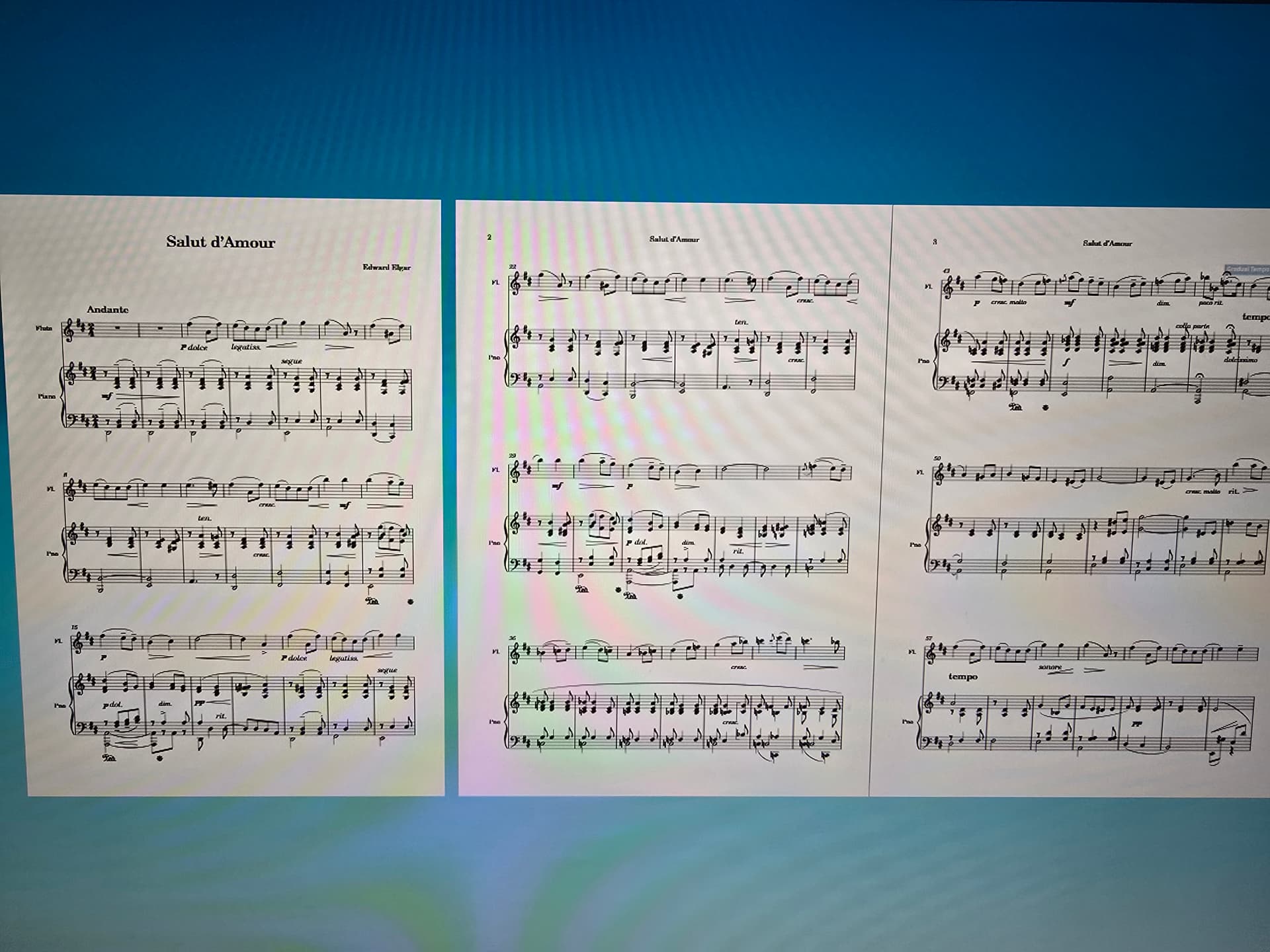
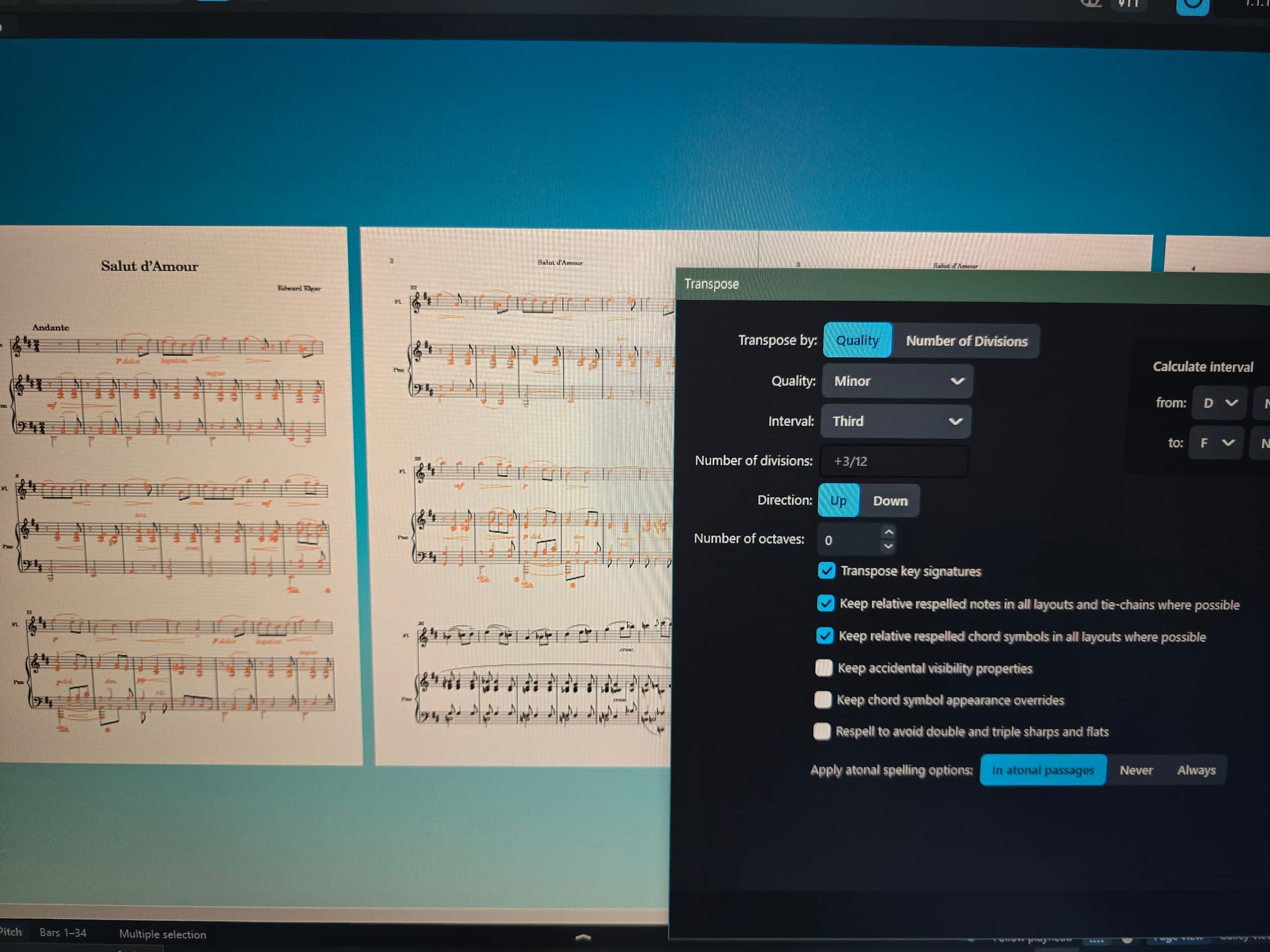

Could you try to use the System Track for the initial selection?
1 Like
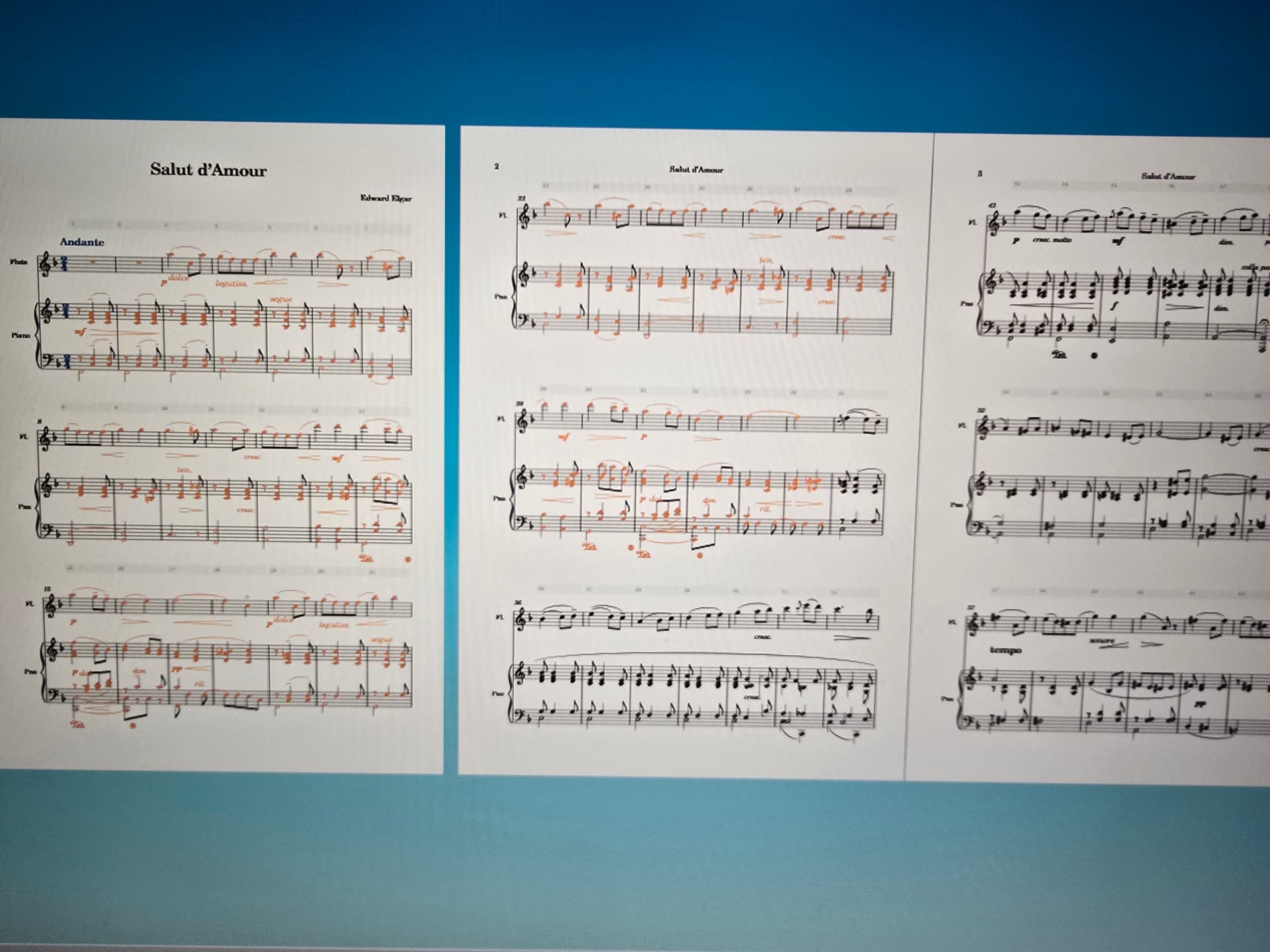
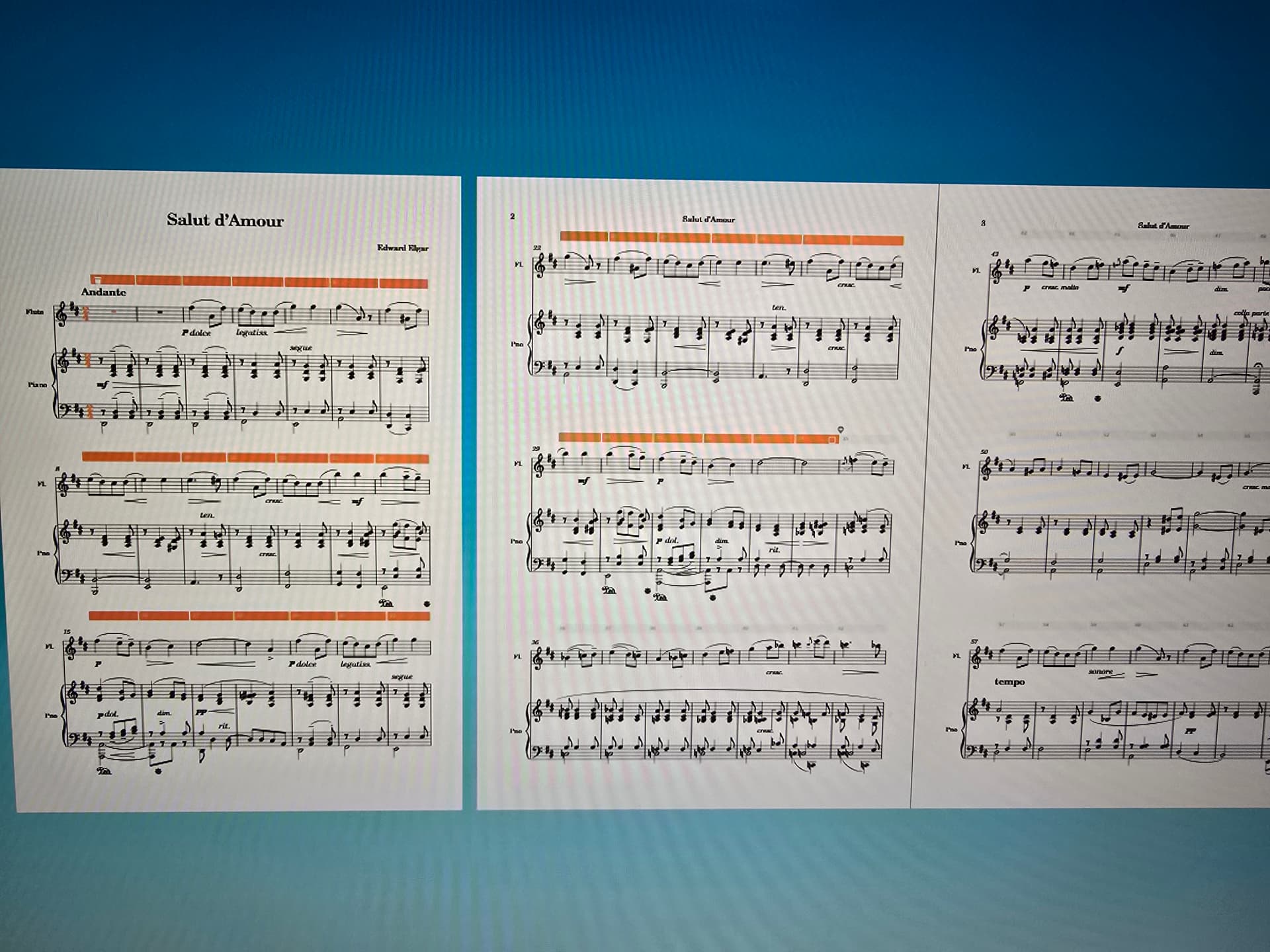

As James said:
If you look closely, the content after the selection has not changed, it is still in F major. You just have to add the F major key signature there so all the accidentals go away 
3 Likes
My question is why doesn’t only the selection area change, but also the unselected part?
The unselected part does not change: If I understand you correctly, the whole beginning of the piece was in F, then you transformed the first bars to D - including the first key signature.
New, the content starting from bar 35 has not been transposed, the notes were kept the same.
What has not happened, is that in bar 35 there is no key change going back from D to F. This is a functionality, Dorico does not have yet. (But I agree that it would be nice to have!)
That was what @JAMES_GILBERT said: You have to add them manually.
2 Likes
If you look at my first question, the original song is D Major. I selected the first part and changed it to F Major, but the unselected last part also changed to F Major. For reference, I crossgraded from Finale. In Finale, you can change the part by selecting the part. Thank you.

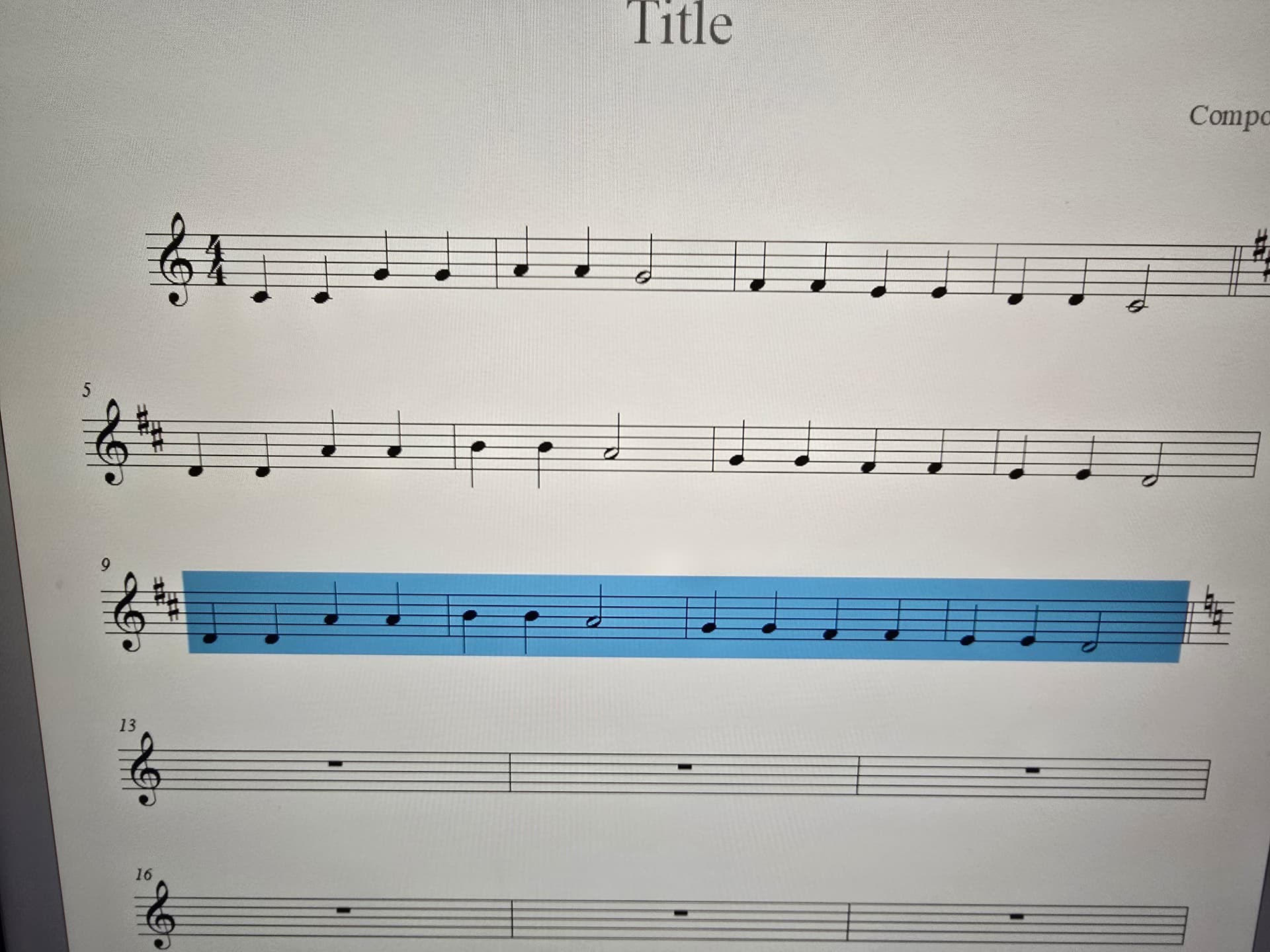
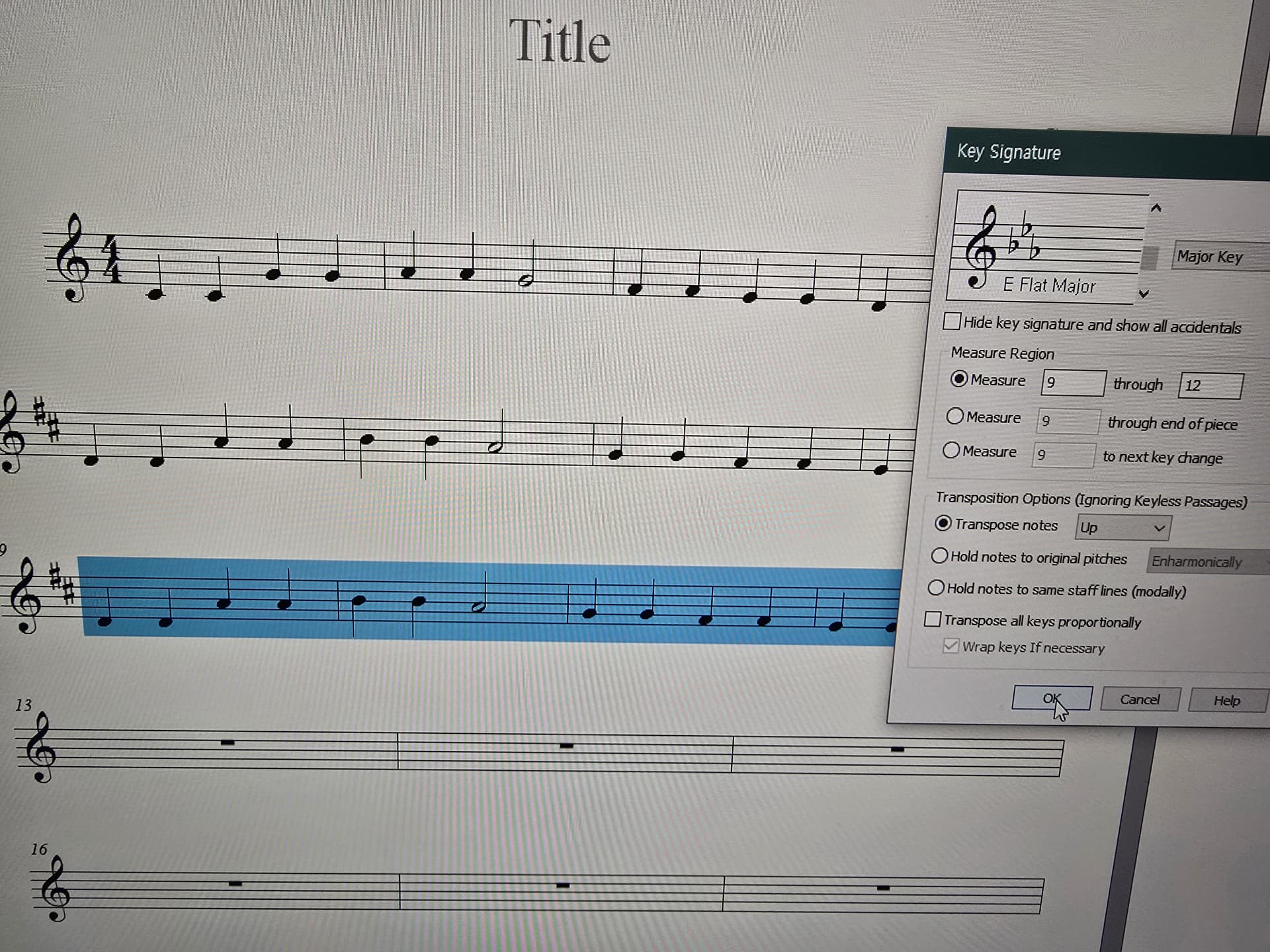

When you change the D major key signature at the start of the piece to F major, it will apply to all notes from there to where you change it to a different key signature.
In Dorico, a key signature change only affects how notes are spelled (which of them show accidentals). It does not change the pitch of notes. [this behaviour is different from Finale and I believe Finale is technically incorrect, though perhaps convenient!]
The option in the Transposition Dialog to change key signatures may be confusing you. It will change any key signature it finds in the selection, but it will not add additional key signatures.
(BTW the original Salut d’Amour is written in E major with no change of key signature)
3 Likes
Please have a look at the third picture in your second post.
The first note in the Flute after the selection is an f natural. It was an f before applying the transformation and it still was an f after the transformation.
2 Likes
The third photo in the second post is an enlargement of the first photo. The conclusion is that in the first photo in the second post, the song in D Major changed to F Major, but why did the remaining part that was not selected change to F Major? It is difficult to convey because the language is different. I used Google Translate.
Here are two D major scales.

After I transpose the first 2 bars (including key signature) to F major, it looks like this:

Although the only key signature shows F major, the notes in bars 3-4 actually have not been transposed and still spell a D major scale.
If you want bars 3-4 to show a D major key signature, you just have to add it.

3 Likes
Yes, this is one of the few remaining instances where Dorico behaves, dare I say, counterintuitively and does not apply a transformation just to the selected range. Especially since it says in the dialog “Transpose key signature”, which it does, of course, but it doesn’t change it back outside of the selection, where the music should remain untouched.
I’d not mind at all if this behavior could be amended…
B.
5 Likes
With all due respect, it is not.
In the first image, the song starts in D major, while in the third image it starts in F major. This is not only an enlargement, it seems like a “before” and “after” progression. If it is not that, you got me confused
1 Like
Please read my explanation in the post above.
1 Like
Now I understand. The habit of using Finale is not easily abandoned. Today, I learn about one more dorico. JAMES_GILBERT. YourMusic.Pro. Estigy. Janus. asherber. Thank you all. ^^ 
2 Likes
Thank you for always providing kind image explanations. They were very helpful in helping me understand.
2 Likes