To the dev team: thanks for your hard work and a solid update.
Question:
I’m doing some work with some French figured bass exercises that use a kind of idiosyncratic notation for dominant 7ths. (This is the system Nadia Boulanger taught, and I think it had its roots in Dubois.)
Root position dom 7ths are 7,+ (vertical)
65 = 6, slashed 5
43 = +6
42 = +4
(the pluses are literal and can’t be replaced with sharps. I understand + has other uses related to the LT in some French pedagogy.)
the “6, slashed 5” works perfectly in Dorico, but I’m not able to replicate the others. Is there a way without resorting to tricking it out via lyrics? (I’d like to avoid lyrics if possible.) Something I’m missing? Is this something you’d consider in your figured bass development or too far from the beaten path? (I do suspect others doing these types of exercises will eventually ask the same questions, but it’s a hyper-didactic perspective that’s more than a little out of vogue today.)
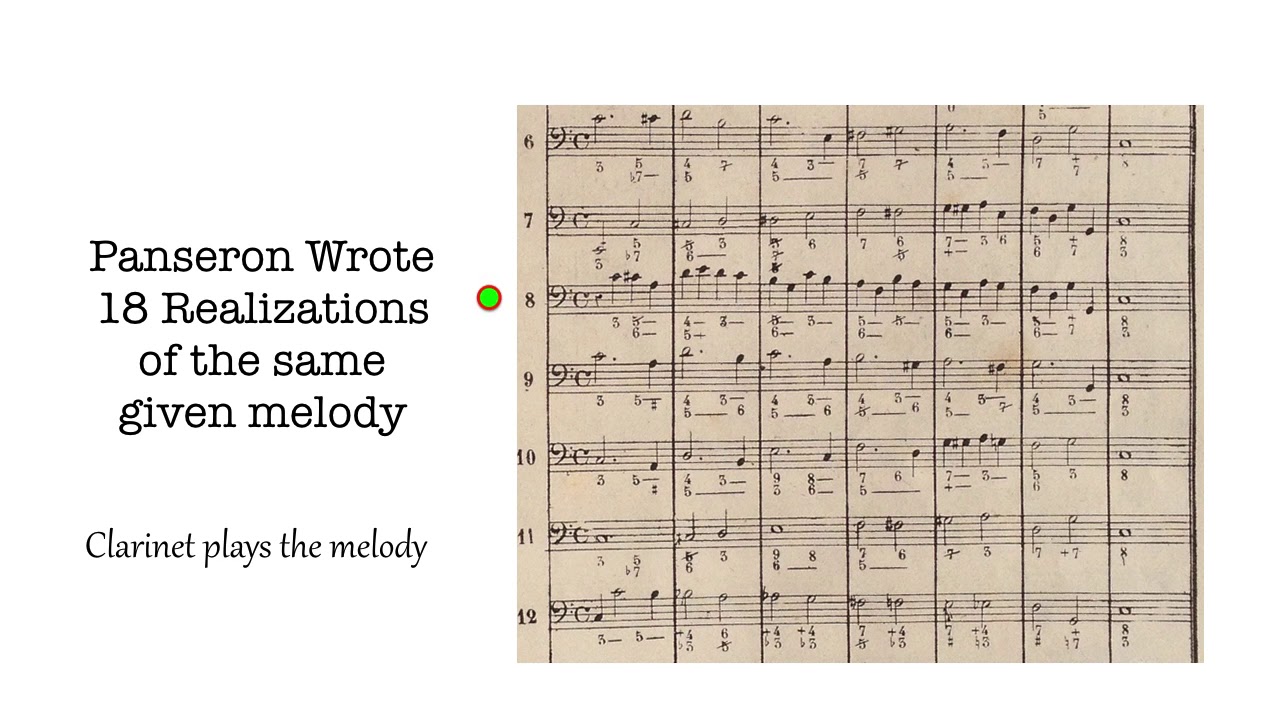
Just to give you an idea what this stuff looks like, a few lines attached… not perfectly standard figured bass notation but perhaps within the umbrella?
thank you. As an aside, I have serendipitously had three conversations since I posted this 12 hours ago that suggest to me this +4, etc. notation is not as uncommon as I assumed, and that variations were used by some French Baroque composers. (And see jeanpierre’s reply to this thread for a fourth vote!)
Will look forward to any accommodation you can make. your team does a pretty impressive job of staying on top of user feedback, as I’m sure you know… but it’s noticed and appreciated.
Salve,
io uso il font MusAnalysis, lo puoi scaricare qui: MusAnalysis - Notation Central
Mi trovo molto bene! E’ facilissimo da usare poiché ci sono tutti gli esempi molto ben descritti. Con Dorico è veramente fantastico!
Buona Musica.
Thanks, beautiful but several figures on different places (rhythmic divisions) on a half note is quite complicated! This works perfect on Dorico’s own figured bass (and in MuseScore which cannot transpose!). I have hope we will get a few more improvements in Dorico in the upcoming updates! Specially about extension lines.@benwiggy@dspreadbury
As a composer, I don’t need figured bass, but as an harmony teacher, I do, at least each year to typeset exams texts.
This notation is very much needed in the academic domain in France (at least), and many of my colleagues stick to other software for this reason.
I find myself writing the notation by hand and scan copies… this is a pity and a counter argument when I praise Dorico to my colleagues…
Please allow this +6 +4 7+ and so on…
Here is a random example: (I could not achieve to upload this image directly without errors…)
It’s really funny, Cacophonix, because I was just wondering how to do the +4 in Dorico and I just came across your message requesting the implementation of this feature! What a coincidence! (Cacophonix is my former teacher )
Of course, I completely agree with Cacophonix: it’s absolutely not natural for us French composers or musicians to see a #4 instead of a +4 for the third inversion of a dominant seventh.
FYI, the “+” stands for the seventh scale degree (“sensible” in French).
It’s really funny, Cacophonix, because I was just wondering how to do the +4 in Dorico and I just came across your message requesting the implementation of this feature! What a funny coincidence (Cacophonix is my former teacher )
Of course, I completely agree with Cacophonix: it’s absolutely not natural for us French composers or musicians to see a #4 instead of a +4 for the third inversion of a dominant seventh.
FYI, the “+” stands for the seventh scale degree (“sensible” in French).
I’ve been advocating for this for quite some time — you can see me on this very thread in 2021… Let’s not lose hope: one of my feature requests from 2016 or early 2017 has been implemented in Dorico 5.1
You can also use Gofigure font (created by @benwiggy and @fkretlow ) — this font used to be Figurato before the Team implemented Figured Bass, and now I’d say the only reason you’d want to use it is because it allows you to input that French-style figures.
Oh, thanks Nor! I did not know it would solve those issues. Gofigure really does (it’s clearly written out in the user guide bundled with the font).
I’ll try it next time I need this kind of objects

 )
)

